Extracted from the notebooks of Dr. Aveline Quill, naturalist of uncertain appointment.
Expedition paper: supernatural woodland ecology
Travels in the Wychwood Province
Being a partial account of a forest which behaves like a map, keeps its own
minutes, and seems politely amused by all attempts at classification.
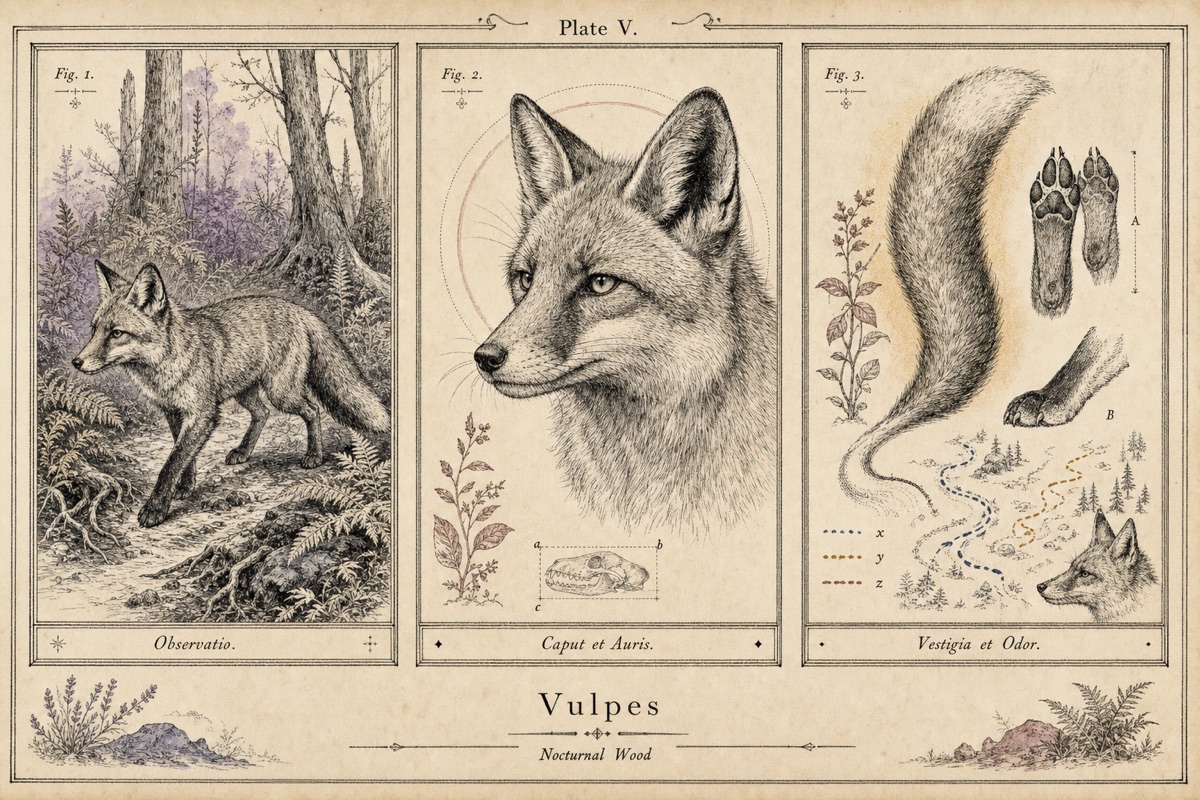
Plate V. The fox that first led the expedition beyond the ordinary timberline.
The following paper is attributed to Dr. Aveline Quill, whose field trunk was found
beside a dry stream that continued to make water noises. Her labels are exacting,
her compass is apologetic, and her conclusions remain provisional.
She did not discover the woods so much as arrive during one of their more sociable
moods.
Field notes
The first seven days beyond the chalk stile
I entered the Wychwood on the third morning after rain, having been advised by
the postmistress to bring a lens, a clean spoon, and no opinions I was fond of.
The stile at the boundary bore no inscription, though a fox sat upon it with the
expression of an examiner waiting for a late pupil.
The creature was red only in the manner that old copper is red. In shadow its coat
took a rose-brown tint; in sun it acquired a seam of amber, and when it passed
through fern it left behind no track, but a corrected suggestion of where a track
ought to have been. I followed, of course. Natural science advances by curiosity,
boot leather, and the occasional poor decision.
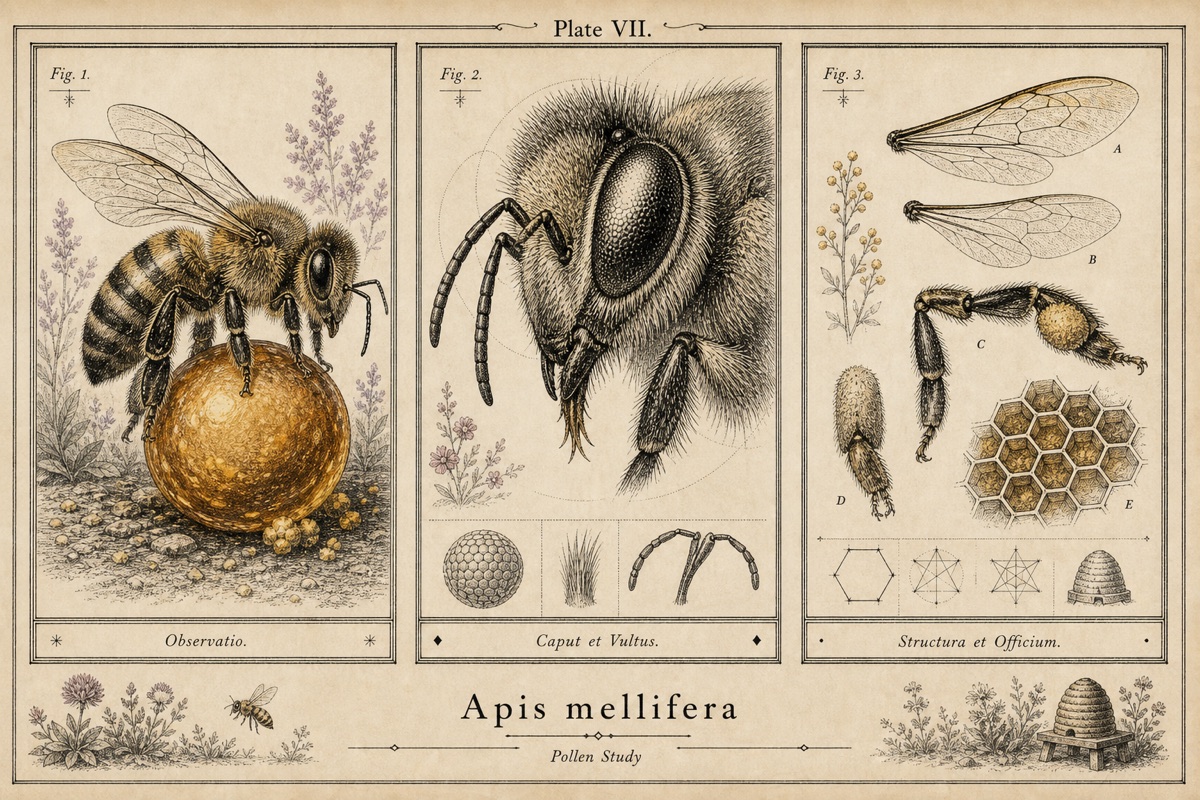
Plate VII. The amber bee, found rolling a bead of impossible pollen uphill.
On the amber pollinators
By noon I observed bees of an industrious but theatrical temperament. Each
pushed before it a round bead of pollen, larger than its body and warm to the
touch, as though the sun had been persuaded into a botanical form. Their hum was
not a sound but a measurement. Wherever they passed, sleeping flowers opened one
eyelid and declined to explain themselves.
I marked the pollen beads as possible lanterns, provisions, or municipal
ordinances. In this biome a thing may be all three before breakfast.
At dusk the path lifted from the ground by approximately one inch. I do not mean
that the earth rose. I mean the idea of the path did, leaving the soil below to
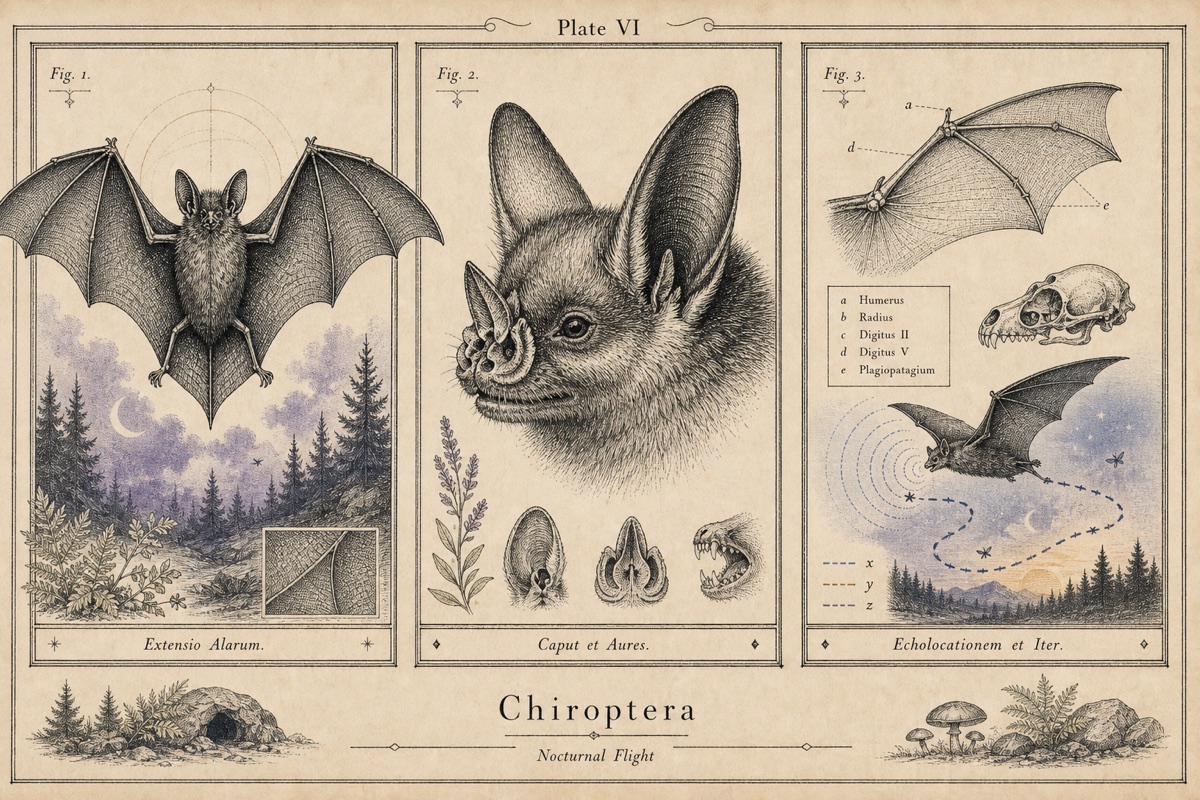
mind its own affairs. It was then that the first bat appeared, tracing a diagram
in the air with wings so thin I could see the evening through them.
Plate VI. Chiropteran cartographer, mapping the forest by echo and courtesy.
On the ceiling of the woods
The bats do not merely navigate. They draft. Their calls strike trunk, mushroom,
puddle, and moonbeam, then return as rings of faint blue light. Where three rings
overlap, a safe turning is usually found. Where none overlap, it is best to pause
and compliment the nearest tree on its bark.
I suspect the player of this world will learn the forest not by seeing farther,
but by listening better.
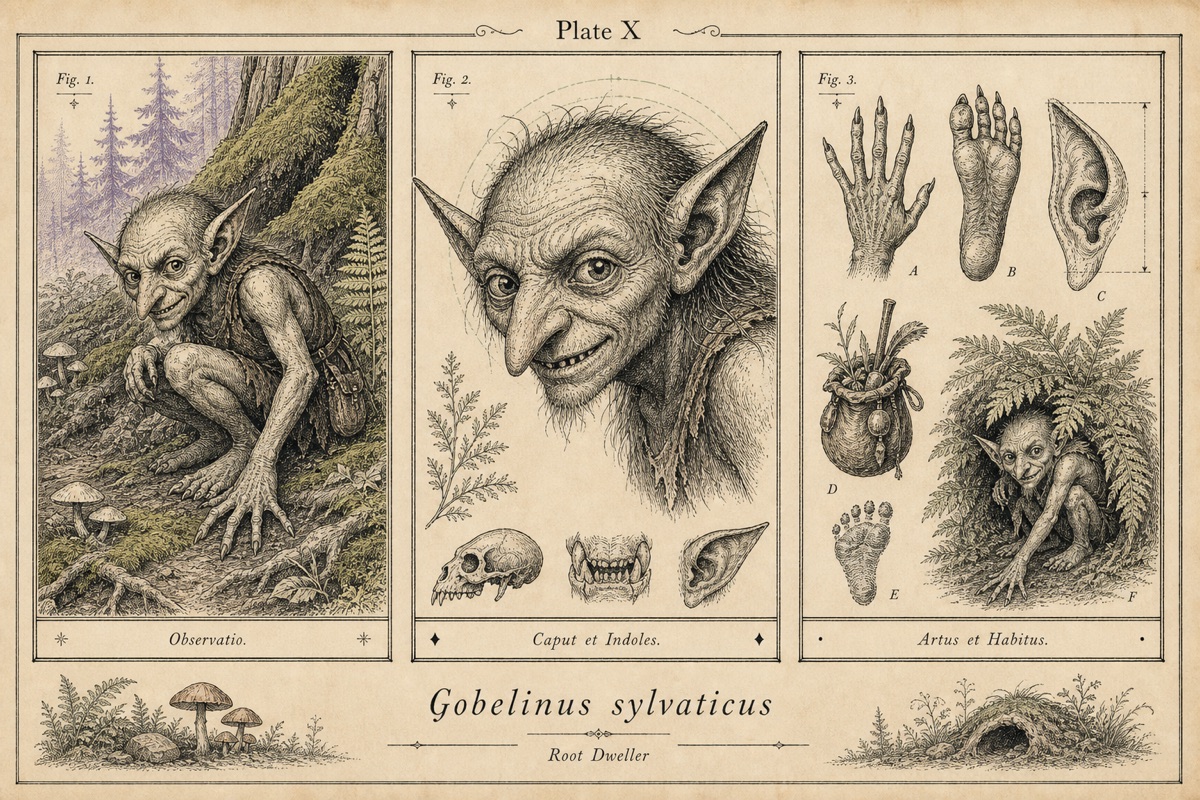
The fourth day brought company. A goblin sat under a root, repairing the hinge of
a beetle's wing with the solemnity of a clockmaker. He accepted my biscuit, rejected
my taxonomy, and drew a better one in the mud using a thorn. His system contained
only two kingdoms: things that keep promises, and things that pretend not to hear.
Plate X. Root-dwelling goblin, artificer of small repairs and smaller lies.
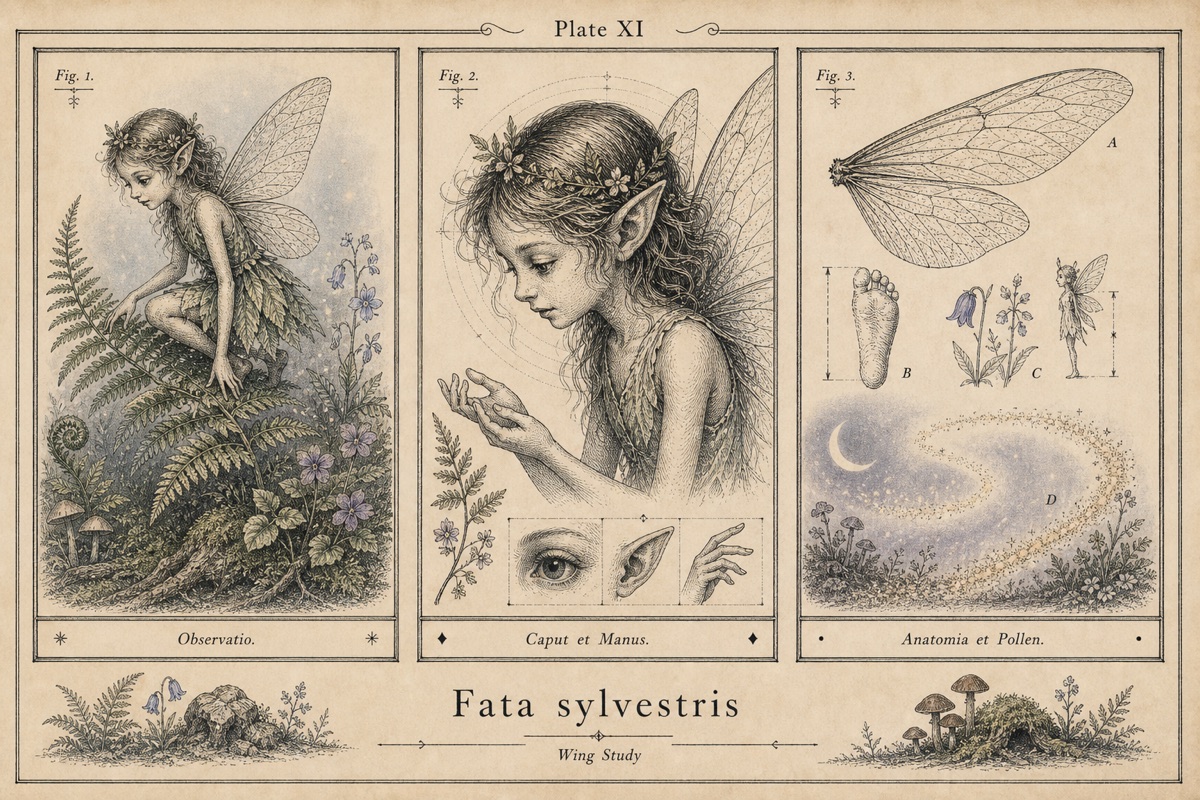
Plate XI. Fern fairy, approximately the height of a foxglove bell.
Near the goblin's workshop, fairies kept a registry of dew. They were not the
glittering persons of nursery prints, but exacting archivists with wings like
transparent leaves. One had tied a thread between two mushrooms and was teaching
a spider the principles of suspension bridges. Another accused my bootlace of
trespass, which was not entirely unfair.
I offered to record their customs. They asked instead that I record their
corrections.
Nocturnal cycle
Moonlit governance of the biome
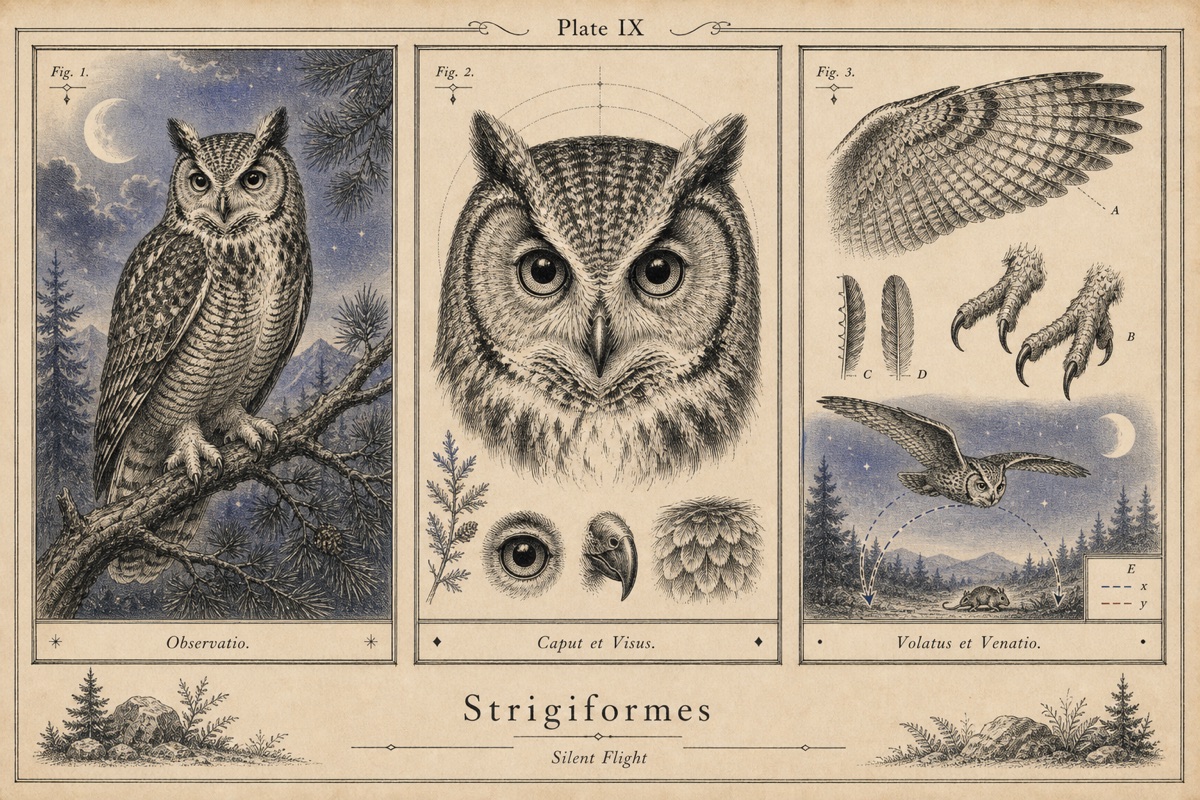
Plate IX. The owl that audits silence and finds most creatures in arrears.
On silent flight
The owls emerge when the last amber leaves have given up pretending to be coins.
Their feathers are not quiet because they lack sound, but because they collect it.
One passed over my tent and took with it the clatter of my kettle, the tick of my
watch, and three uncharitable thoughts I had been keeping about midges.
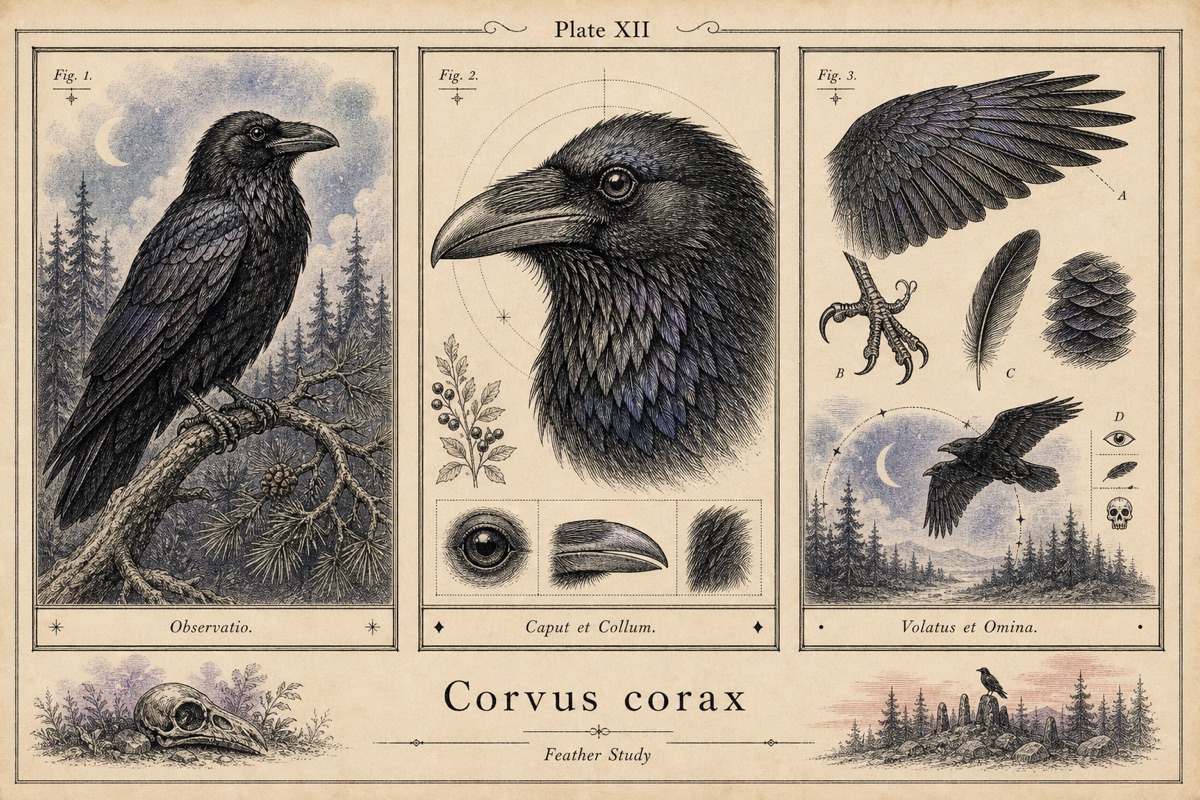
Plate XII. Raven of the upper branches, recorder of names not yet spoken.
On avian clerks
Ravens serve the Wychwood as clerks, critics, and, when necessary, weather. They
write in scratches upon fallen bark and erase their minutes by dropping the bark
into streams that run uphill. I found my own name entered twice: once as visitor,
once as pending.
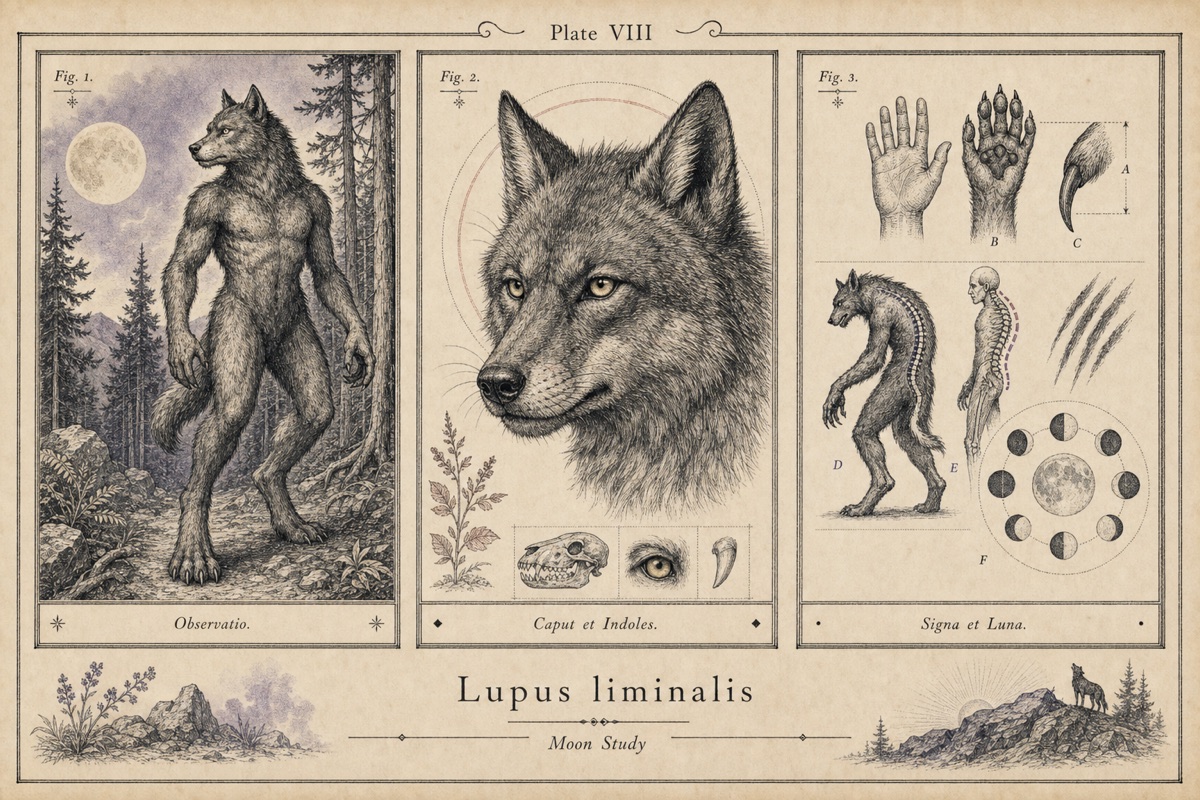
Plate VIII. Lupine moon-keeper, observed pruning brambles with great seriousness.
On the moon-keeper
The werewolf was not the terror of village pamphlets, but a moonlit groundskeeper
with excellent posture and a disinclination toward nonsense. He tended the night
paths, trimmed brambles from the stars' reflections, and growled only when I
stepped on a young mushroom colony. The rebuke was deserved.
He pointed me toward home at dawn. His claw indicated a track that had not been
present before, but had clearly been waiting for me to deserve it.